Surname map of MORE
Enter the surname and press "Search" to generate the map.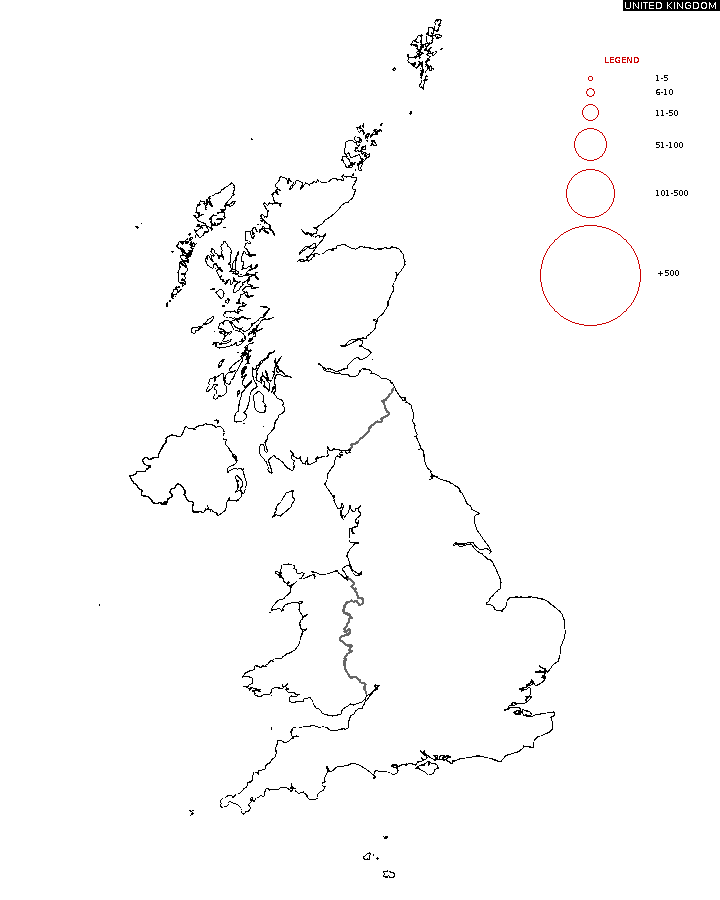


Surname: More
Origins of the surname More
The surname More has origins in multiple regions, with significant historical ties to both French and English heritage. The name can be traced to both Old French and Old English sources, and it has been recorded in various forms throughout history. It is believed to be a topographical surname, derived from the Old French word "mor" or "more," meaning "moor" or "marsh." This suggests that the surname was originally given to individuals who lived near or worked in a moorland or marshy area. In this sense, the surname would have referred to people who resided by such geographic features.
In addition to the French influence, the surname More could also be of Old English origin. The name may have been used to describe someone who lived near a "moor" or "marsh," similar to its French counterpart, or it could have referred to someone who had a connection to the landscape, such as a herder or a person who worked the land in these often wet or boggy areas. The surname is relatively old, with early records dating back to the medieval period when surnames became hereditary in the British Isles.
Another possibility is that the surname More could be a variation of the given name "Maurice," which itself originates from the Latin "Mauritius," meaning "dark" or "Moorish." This connection could indicate that some bearers of the surname were descendants of individuals with the name Maurice or were of Moorish origin, though this is less commonly accepted than the topographical explanation.
Throughout history, the name More has appeared in various forms and spellings, including "Moore," "Mores," and "Moor." These variations are often due to regional dialects and differences in spelling conventions over time. Despite these variations, the meaning and origin of the surname remain largely consistent with its connection to geography, either as a description of someone's location or occupation.
The meaning of the surname More
The meaning of the surname More is primarily tied to its topographical origin, specifically referencing individuals who lived near a "moor" or "marsh." In medieval England and France, people were often named after the geographical features that defined the areas where they lived. In this case, the surname would describe someone residing in a boggy or marshland area, where the environment was characterized by wet, low-lying land often used for pasture or farming.
The surname More may also have a secondary meaning tied to the Latin "Mauritius," as a variation of the name Maurice. This could imply a person of Moorish descent or someone with darker features, referencing the historical migration and settlement of North African Moors in Spain and southern Europe during the medieval period. This interpretation would apply more to individuals who adopted the surname as a given name or through familial heritage, rather than as a geographical identifier.
In some cases, the surname may have been adopted by individuals who worked as keepers or caretakers of moorland, herders, or others whose occupation was associated with marshy land. Thus, the surname has both geographical and occupational meanings, with its most common interpretation relating to the environment of the bearer.
The variants of the surname More
The surname More has several variants, reflecting its linguistic and geographical history. The most common variant is "Moore," which is especially prevalent in the United Kingdom and Ireland. "Moor" is also a common form, while "Mores" can sometimes be found in older records or specific regions. Additionally, the name "Moor" and "More" are sometimes used interchangeably in historical documents, contributing to the confusion in identifying the precise origin of the surname in individual cases.
Other possible variations include "Moorish" or "Mores," though these are rarer and often appear in historical or literary contexts rather than as common surname forms. Despite these variations, the basic root of the surname remains tied to the Old French and Old English words for "moor" or "marsh," and they share a common historical origin.
Distribution of the surname More
The surname More is found in various regions, with the highest concentration in the United Kingdom, particularly in England, where it has been a common surname for centuries. The name is prevalent in areas with a history of moorland or marshy geography, particularly in the northern and midlands regions of England. The surname is also quite common in Ireland, where variations such as "Moore" are widespread, reflecting the shared Anglo-Irish heritage of the surname.
As a surname with both French and English roots, the name More has also been carried by individuals across the English-speaking world, particularly in former British colonies. It is found in the United States, Canada, Australia, and New Zealand, where it has been passed down through generations of descendants of British and Irish immigrants. The surname may appear less frequently in these countries compared to its prevalence in the UK, but it is still a recognized surname in many English-speaking communities.
In addition to the UK and Ireland, the surname More can occasionally be found in France, particularly in regions historically influenced by English or Norman settlers. However, the name is more commonly associated with English-speaking countries, reflecting the migration patterns of individuals with this surname during the colonial and post-colonial periods.
Famous people with the surname More
Among the famous people who bear the surname More are:
- Sir Thomas More (1478–1535) – One of the most famous bearers of the surname, Sir Thomas More was an English lawyer, philosopher, and statesman who served as Lord Chancellor of England. He is best known for his work "Utopia" and his martyrdom, as he was executed for refusing to acknowledge King Henry VIII as the head of the Church of England. He was canonized as a saint by the Catholic Church in 1935.
- Morecambe and Wise – The famous British comedy duo of Eric Morecambe and Ernie Wise, who were best known for their television shows in the 1960s and 1970s. Their comedy and contributions to British entertainment have made them iconic figures in the UK.
- Vincent More – A noted American actor, Vincent More had a successful career in film and television, recognized for his versatile performances in both drama and comedy.
- David More – A British-born author and journalist, David More has written extensively on topics related to international relations, political history, and cultural studies.
These individuals, spanning fields such as politics, literature, comedy, and journalism, have contributed significantly to their respective domains, bringing recognition to the surname More throughout history.
| Share on WhatsApp Tweet |